Futuristic cities and retro shopping streets: the diverse scenery you encounter while strolling through Tokyo
THE ASAHI SHIMBUN
December 25, 2025
PR by The Asahi Shimbun
(Tokyo Convention & Visitors Bureau grant project)
What kind of city is Tokyo? Even when I, your guide for this tour, am asked that question, the answer is hard to sum up in just one phrase. Tokyo consists of 23 special wards along with multiple municipalities that include islands, and each area has a completely different character. Among them, your guide introduces two contrasting neighborhoods: Shibuya, accelerating toward the future, and Asakusa, continuing to engrave its history. Walking through these two contrasting neighborhoods will surely reveal the profound depth of Tokyo.

Guided by a giant lantern, toward Sensoji Temple with 1,400 years of history
On this pleasant October morning under clear autumn skies, our journey leads to Sensoji, one of Tokyo’s most iconic landmarks. Located in the northeastern part of the city center, Asakusa offers convenient access via four train lines at Asakusa Station. From any of these stations, it takes only a few minutes on foot to reach the temple’s entrance, the famous Kaminarimon Gate (Thunder Gate).
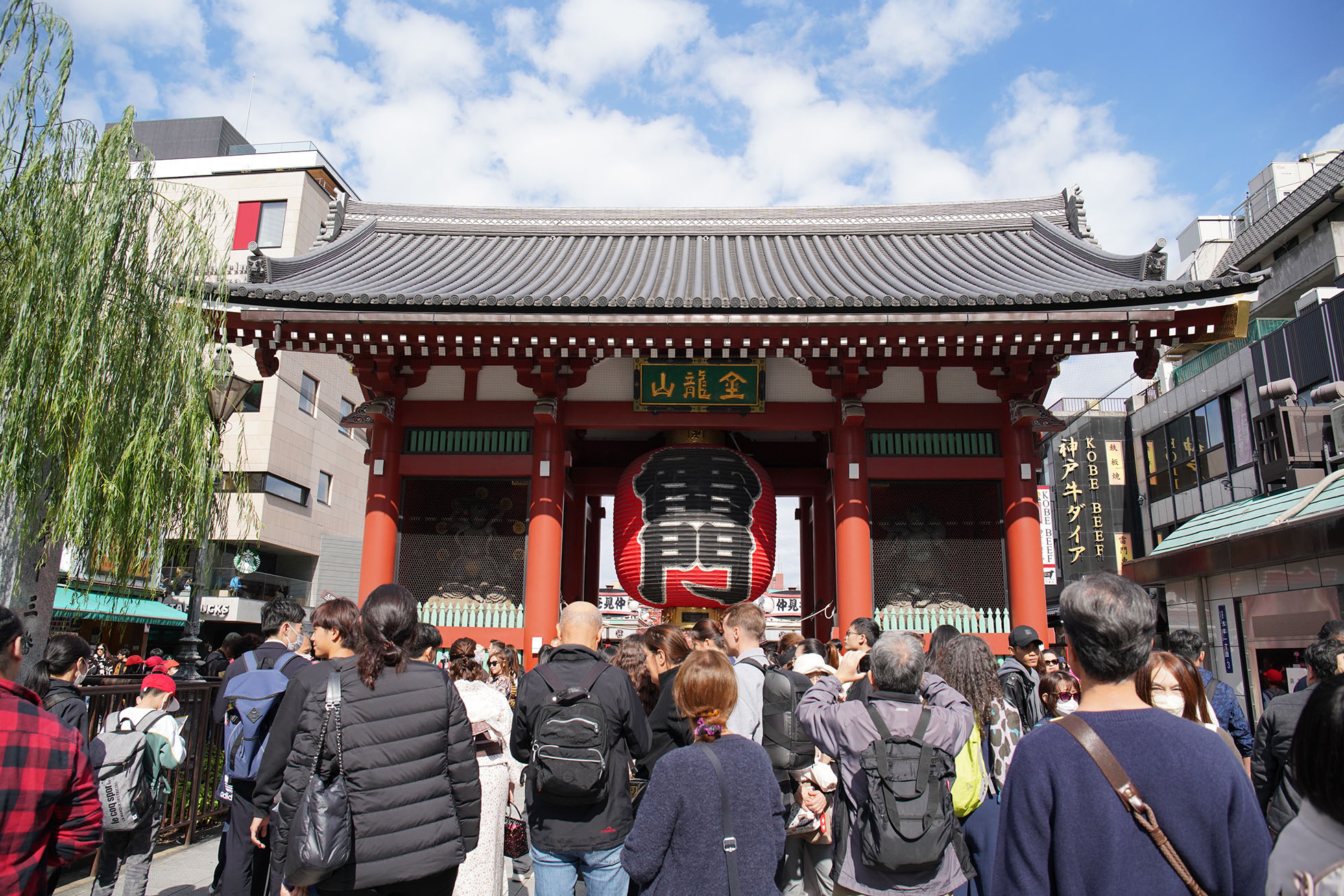
The area in front of Kaminarimon Gate was already bustling with many foreign tourists. Before entering, I'd like to briefly touch on the history of Sensoji Temple.
In front of the Kaminarimon Gate, crowds of foreign tourists have already gathered. Before we step inside, it is worth briefly touching on the history of Sensoji Temple.
The story begins in 628, when two brothers fishing in the nearby Sumida River pulled a wooden statue of Kannon from their nets. A local influential figure recognized it as the sacred image of Bodhisattva Kannon and began to enshrine it. *1
During the Edo Period, the temple came under protection as a place to pray for the peace of the shogunate. In March 1945, the Tokyo air raids destroyed the main hall and other structures, but the Kannon statue had been “evacuated” beforehand and remained safe. The current main hall, made of reinforced concrete, was rebuilt in 1958. *2
(※1・2) Source: Sensoji Temple (https://www.senso-ji.jp/about/chronology.html)
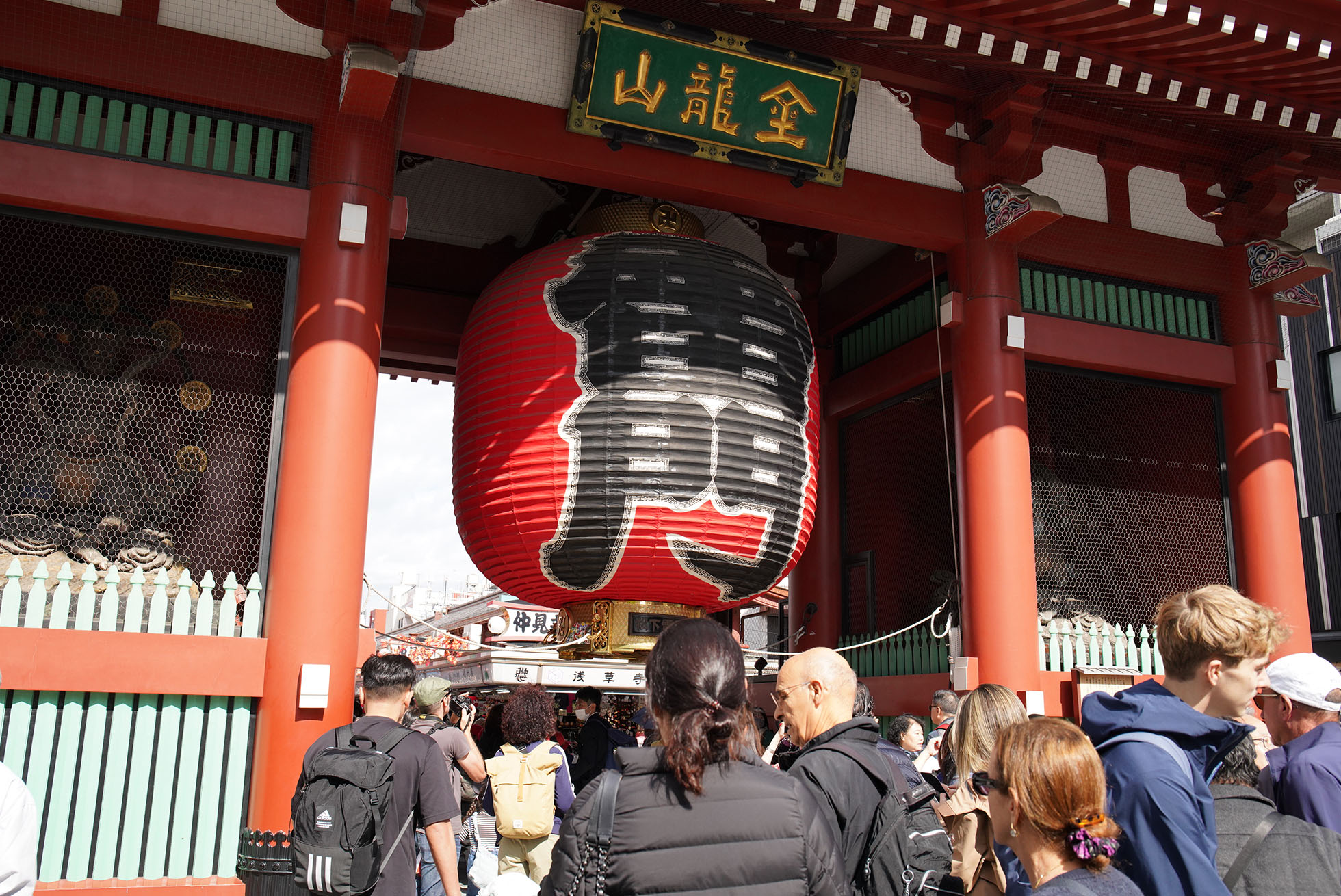
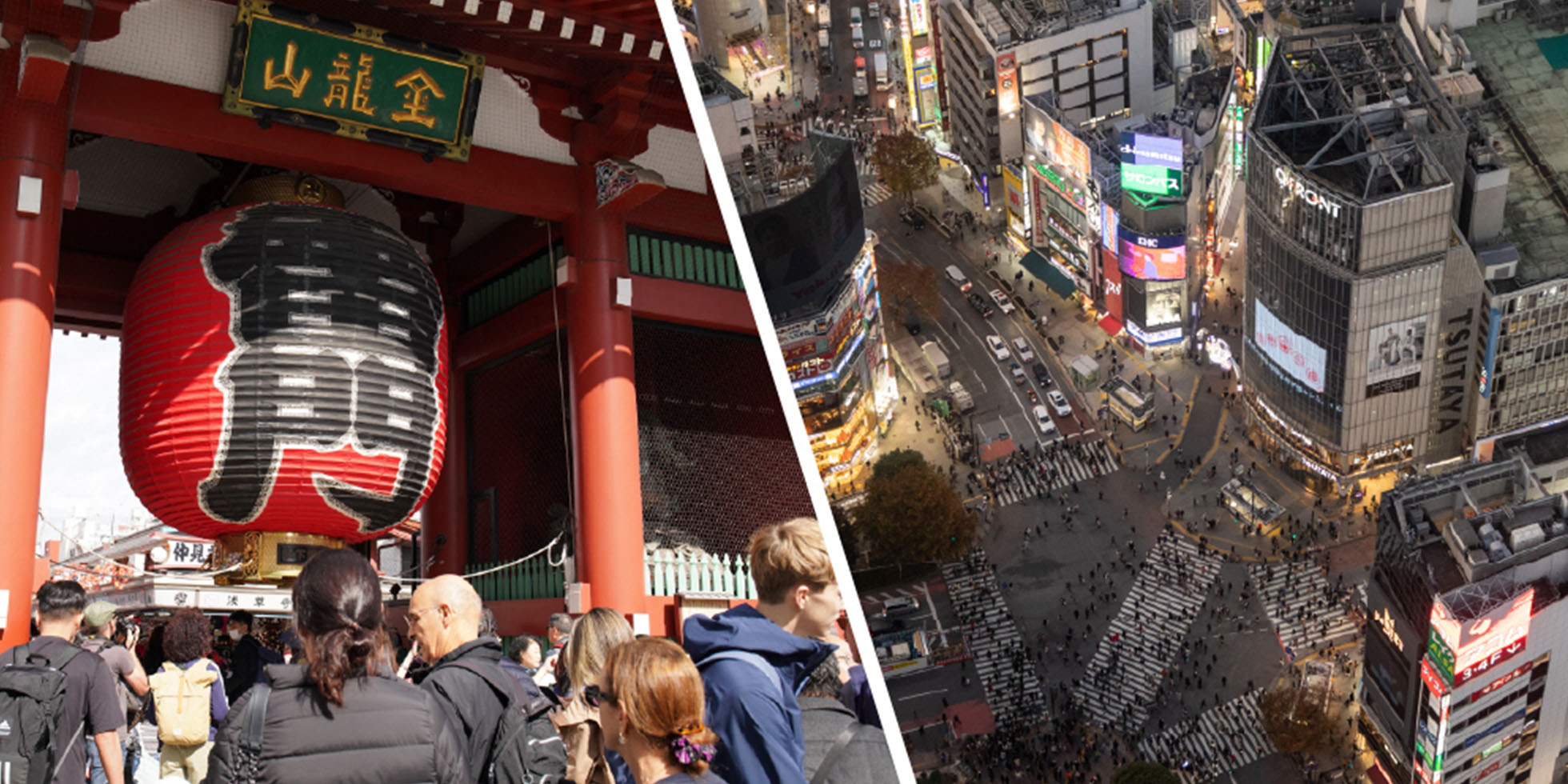
Amid the lively crowd, we can cross the symbolic Kaminarimon Gate of Asakusa. The large red lantern hanging in the center measures 3.9 meters in height and weighs 700 kilograms. On either side stand statues of the Wind God and Thunder God, placed to protect the temple from wind and water disasters. *3
(*3) Source: Sensoji Temple (https://www.senso-ji.jp/about/chronology.html)
Like stepping back in time: a shopping street brimming with old-town charm
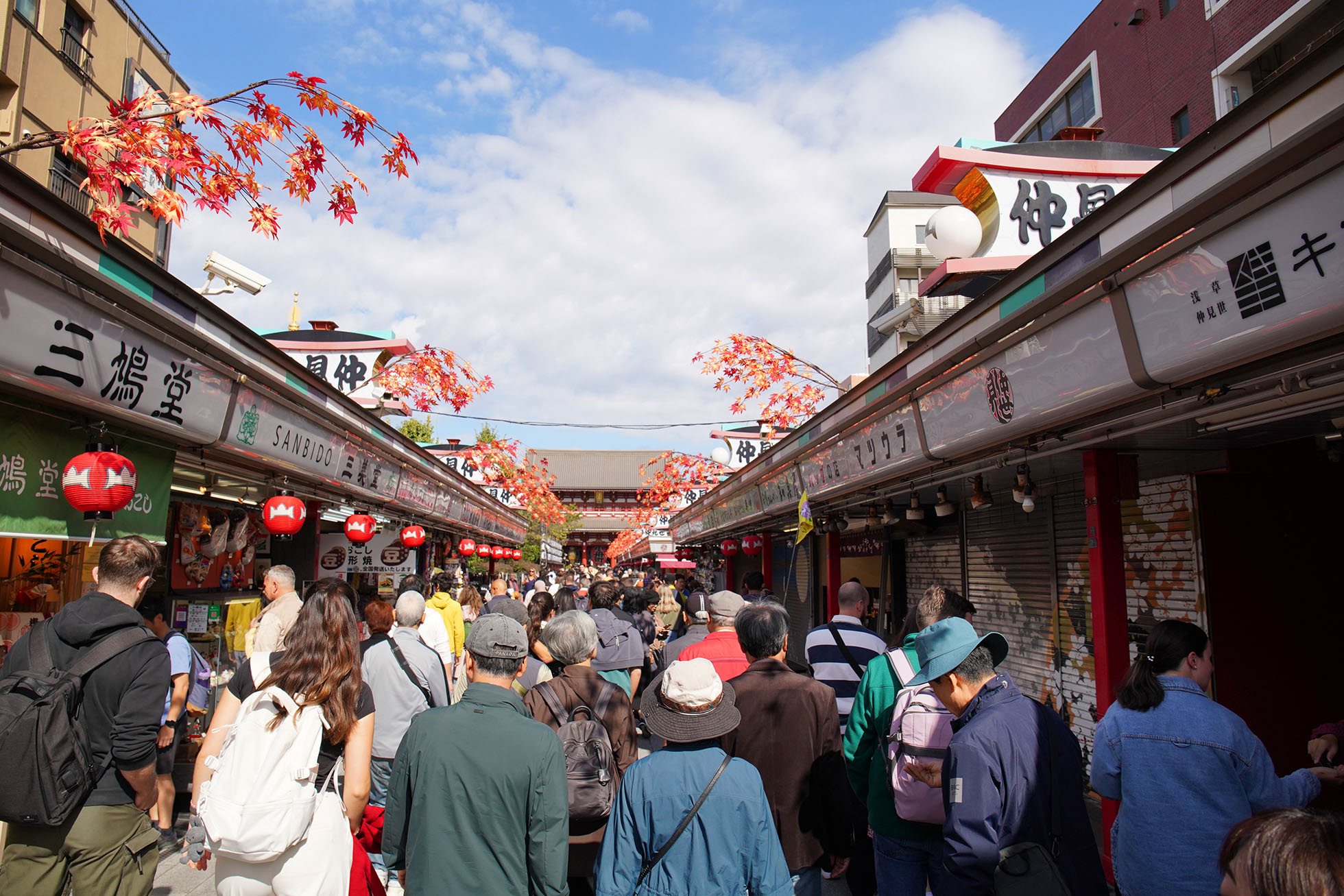
Beyond the Kaminarimon Gate lies Nakamise Street, a stretch of about 250 meters lined with vermilion-painted shops. Colorful Japanese accessories, rice crackers, “geta” wooden clogs, “uchiwa” fans ... . The lively atmosphere feels like a festival, and just browsing is endlessly enjoyable.
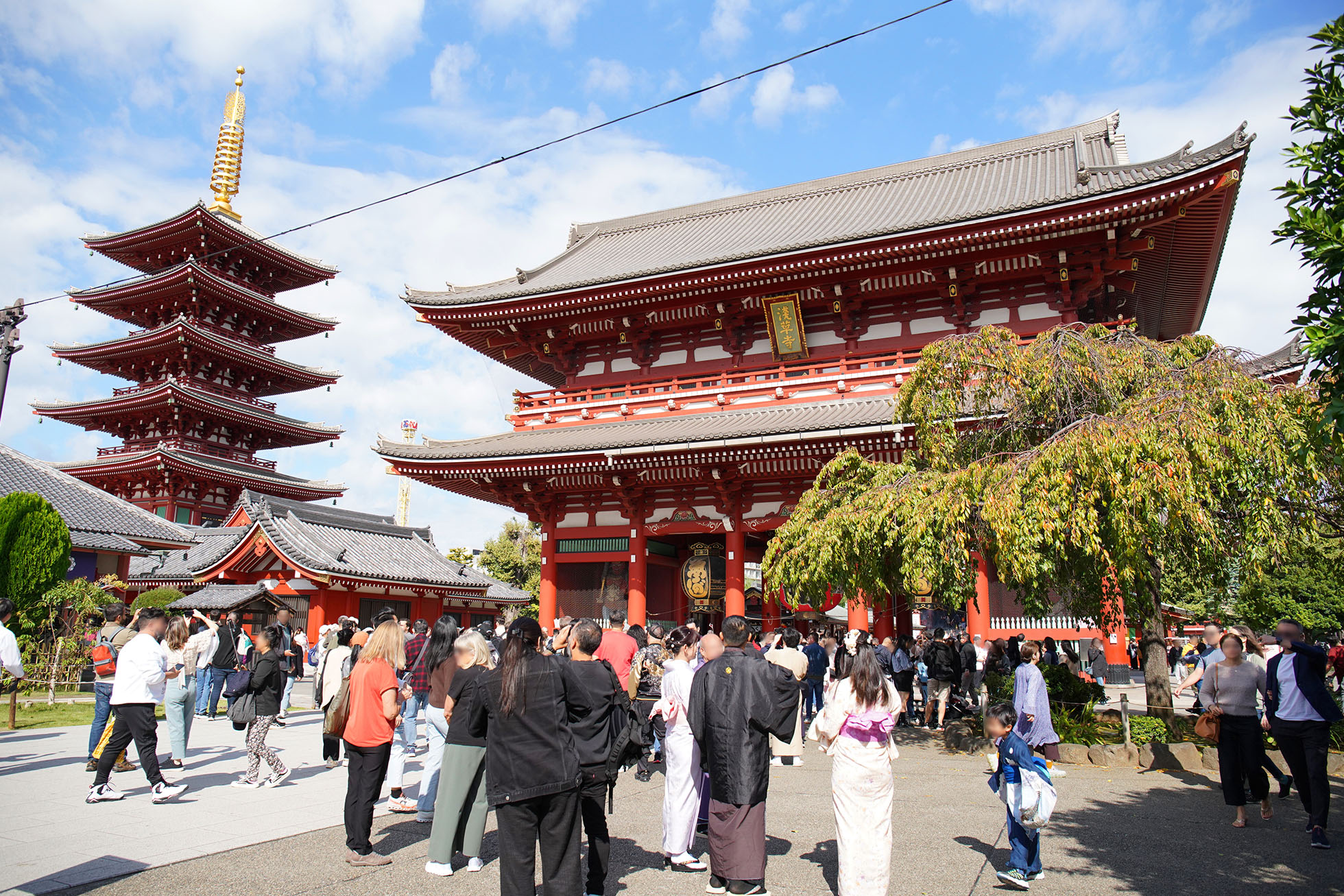
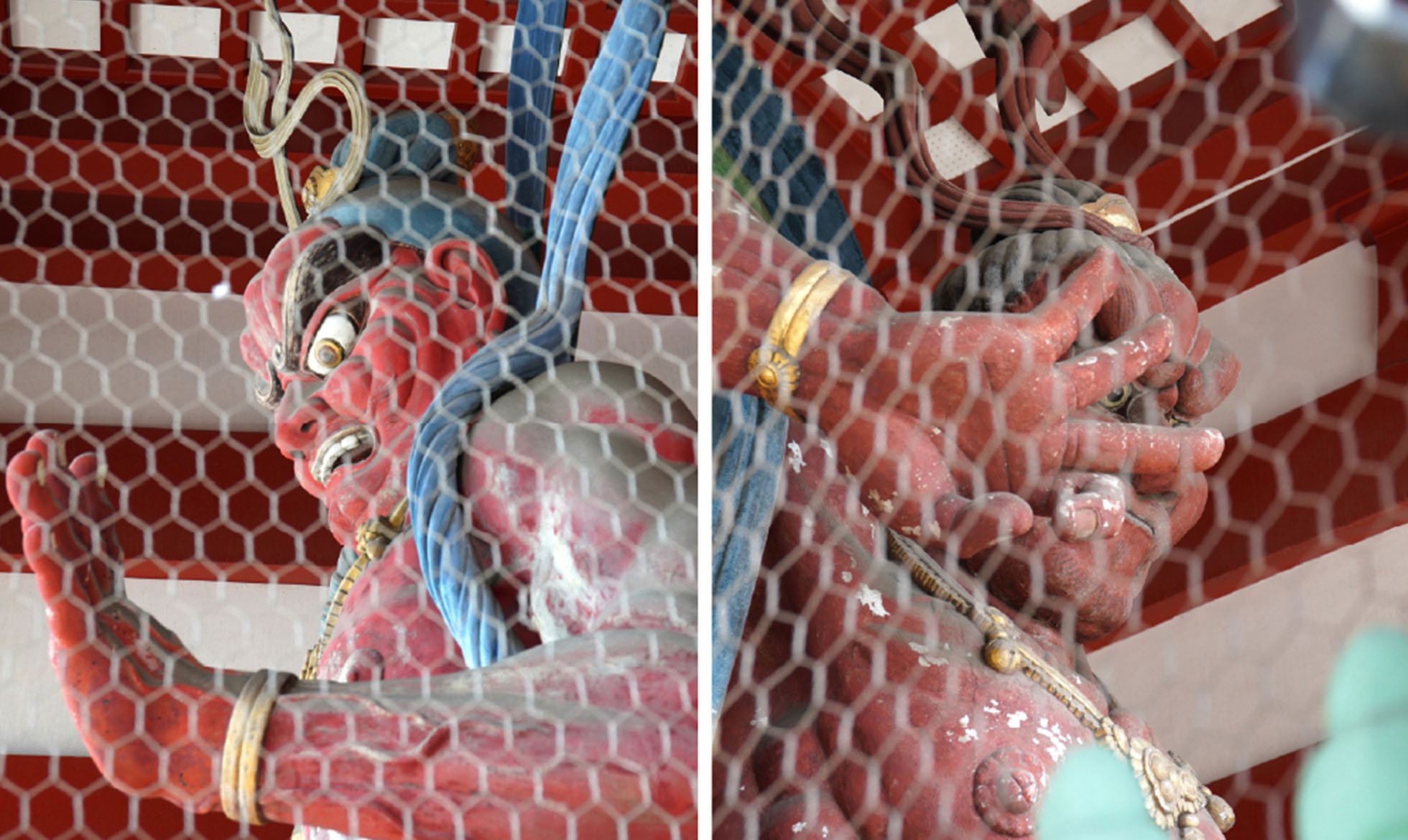
After passing through Nakamise Street, we were greeted by a two-story vermilion gate. It is the Hozomon Gate (Treasure Gate), the main gate of Sensoji Temple. A massive lantern hangs in the center, and on either side stand two guardian statues: the open-mouthed Agyo and the closed-mouthed Ungyo.
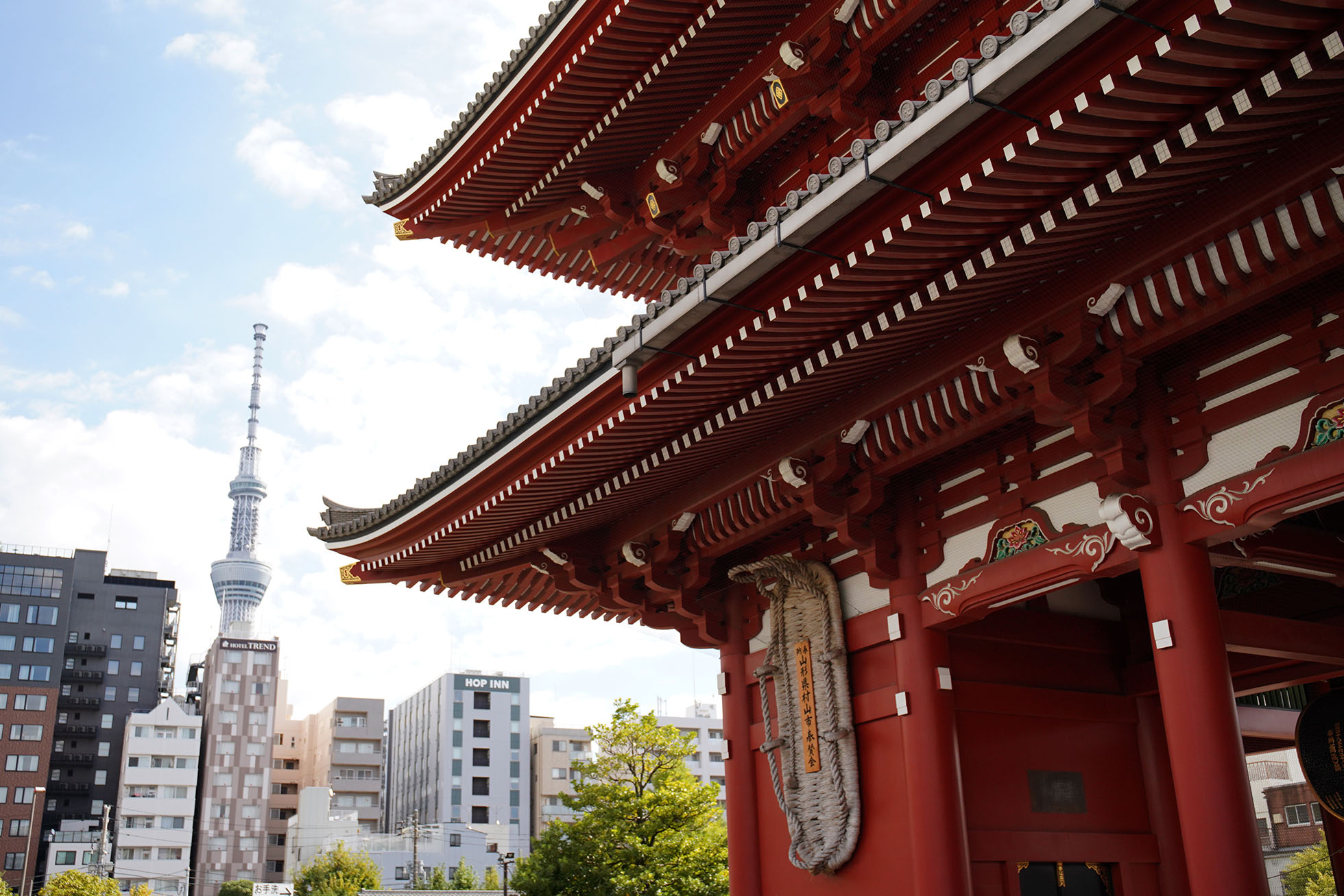
Behind the gate are giant “waraji” straw sandals of the Nio guardians, making it worthwhile to take a look back after passing through. A view of Tokyo Skytree® in the southeast offers an excellent photo opportunity.
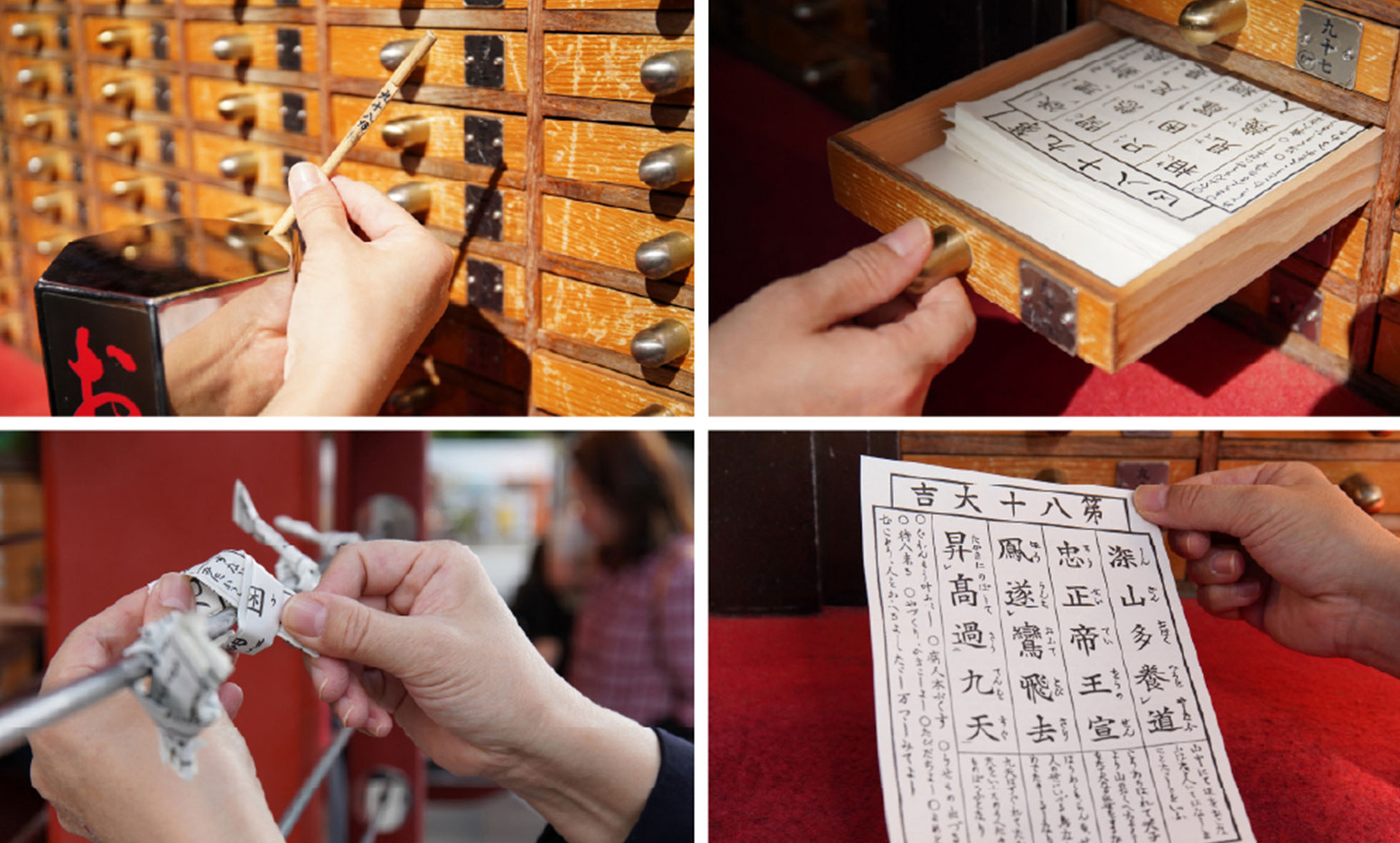
Here within the temple grounds, we find a fortune box, and we can draw an omikuji after paying 100 yen. It turns out to be “Daikichi (great blessing),” with the joyous words, “Your wish will come true.”
Moving forward with light steps takes us to the main hall where the Kannon statue is enshrined. In front of it stands a large incense burner, surrounded by a crowd eager to bathe in the smoke. It is said that bathing in this smoke helps heal ailments in the body.
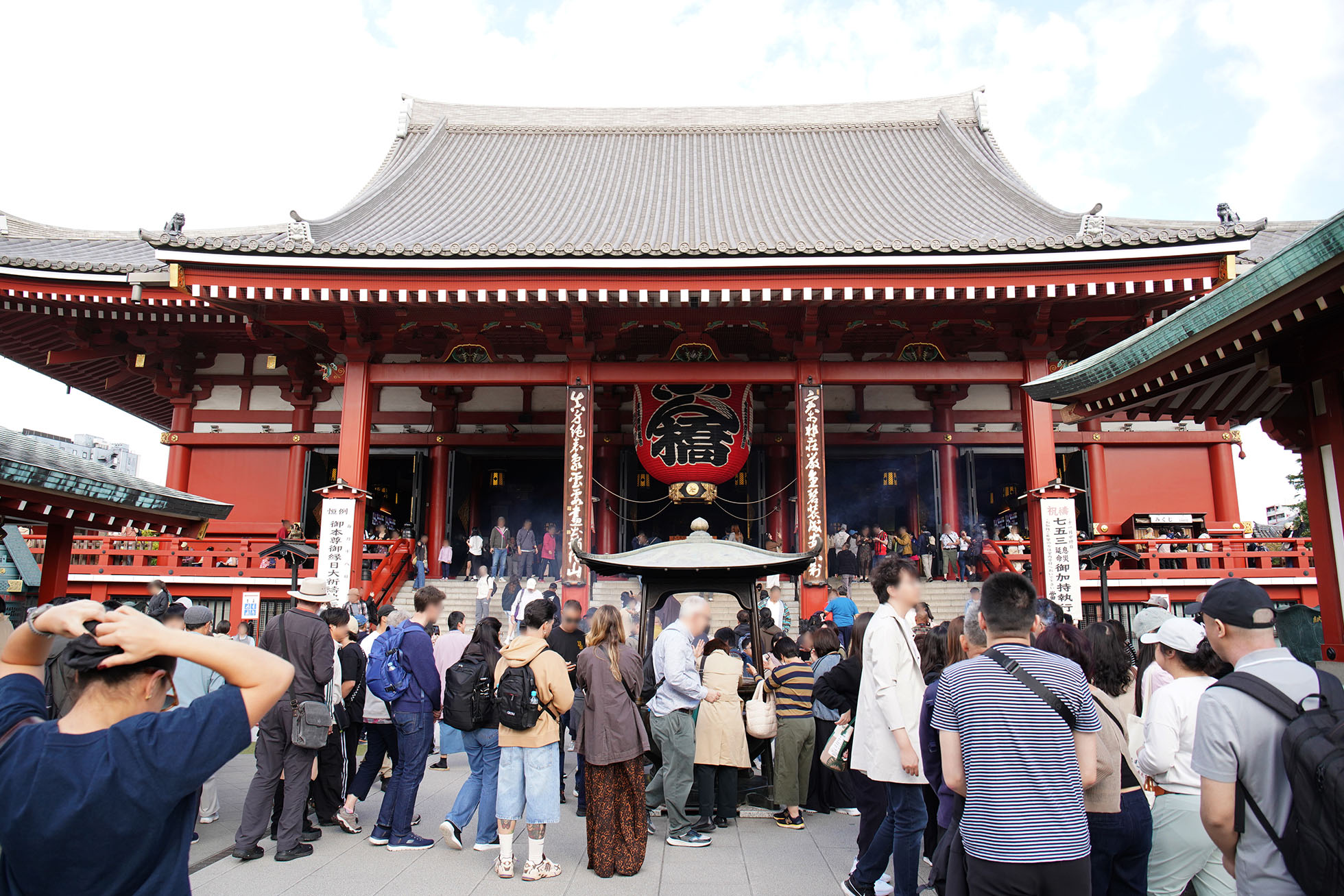
After stopping at the purification fountain at the main hall, we can join our hands in prayer. The sacred statue of Bodhisattva Kannon enshrined here is an absolute hidden image, never shown to the public. As we slowly descend the steps of the main hall, our thoughts may wander about what form the statue takes.
Information
English Website for Asakusa and Sensoji Temple
https://www.senso-ji.jp/english/
The world’s busiest? Shibuya’s famous Scramble Crossing
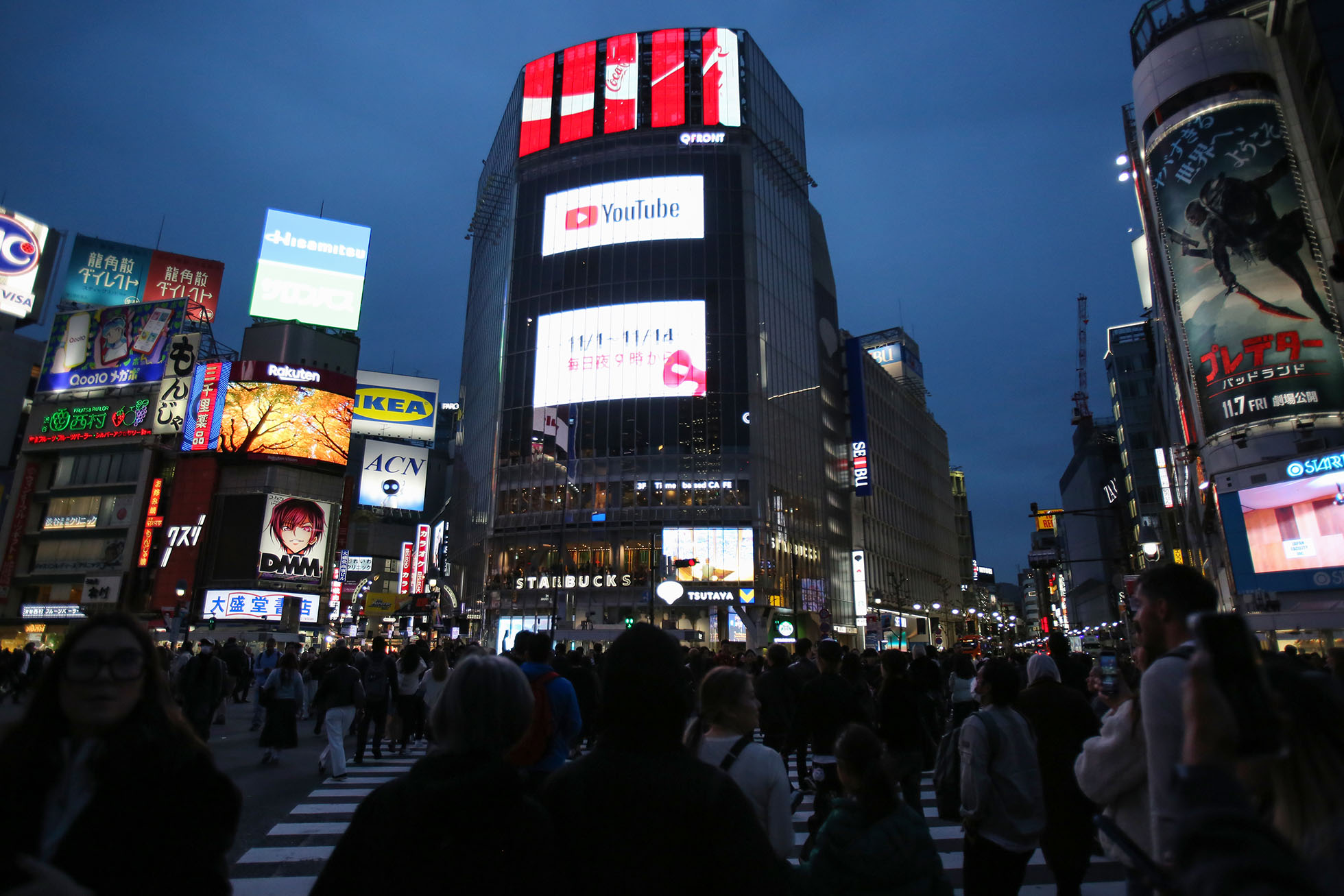
After enjoying the historic streets, our next destination is Shibuya. Large-scale redevelopment around the station is underway, driving forward a visionary approach to urban planning.
Exiting the central ticket gate of JR Shibuya Station reveals the world-famous Scramble Crossing. Ten traffic lanes intersect, with five crosswalks painted across the road. Known as “the busiest crossing in the world,” it is astonishing that more than 1,000 people cross during a single green light. Beyond the crosswalk lies a bustling district and commercial facilities popular among young people.
The current scramble-style crossing was introduced in 1973 *4. Since then, its appearance in movie scenes and other media has boosted its global recognition. Frequently featured in weather reports and news broadcasts, it has become one of the iconic faces of modern Japan.
As the light turns green, the area fills with people taking commemorative photos and videos on their smartphones. It feels like stepping into a movie scene. While the excitement is understandable, this is still a crossing, and being too absorbed in filming can lead to collisions, so careful walking is advised.
(※4) Source: Asahi Shimbun
Once a hub for youth culture, now a center for business
Even at the corner of that lively crossing, a line has formed. A glance revealed the reason: amid the crowd stands the “Statue of Hachiko, the faithful dog,” posing for photos with visitors.
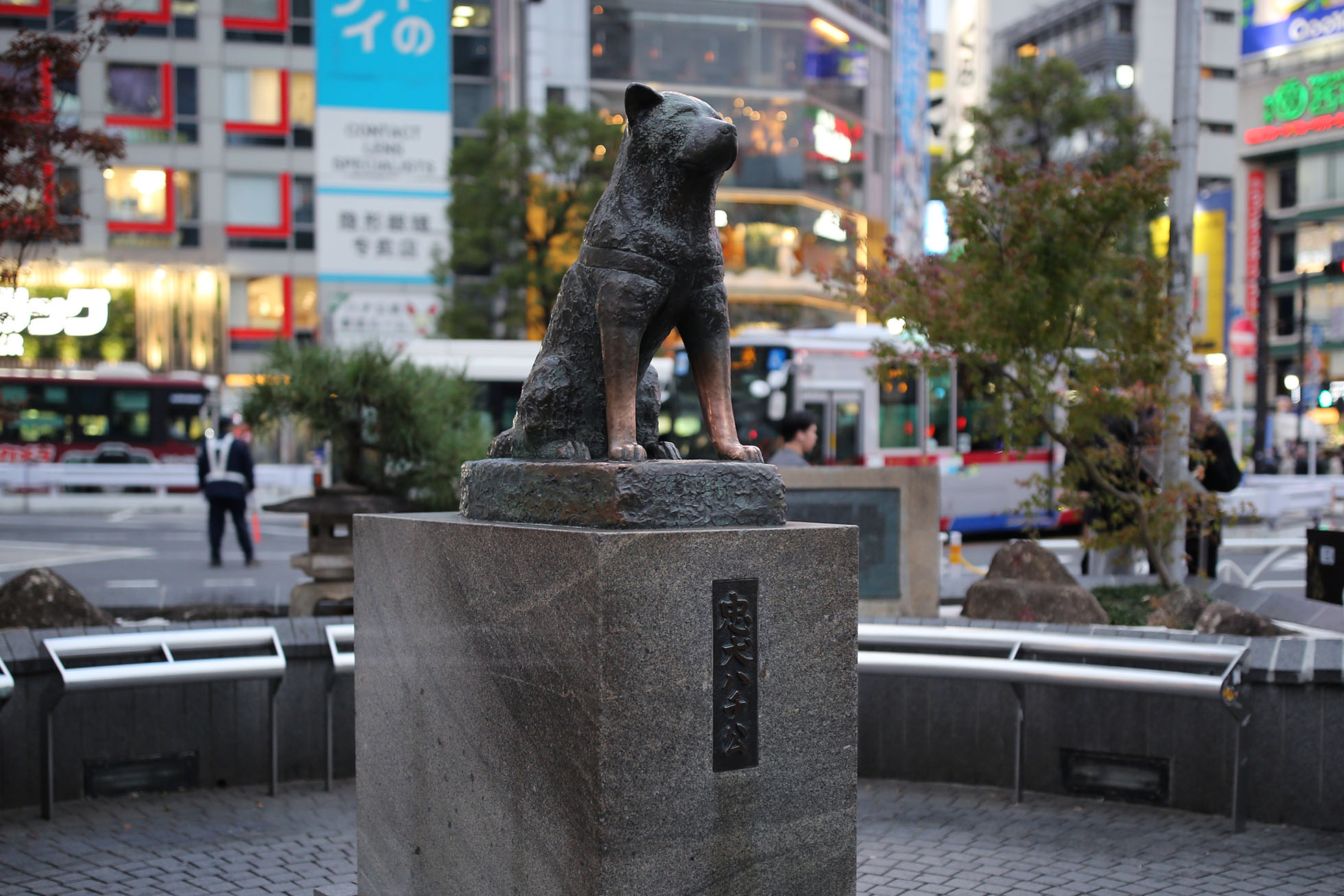
This bronze statue depicts Hachiko, an Akita Inu dog that used to accompany its owner to and from Shibuya Station before World War II. Even after the owner’s death, Hachiko continued to visit the station, waiting for the owner’s return that never came. This story later inspired an American film. Today, the statue is a popular tourist attraction, but before mobile phones became widespread, it was famous as a meeting spot for young people. Shibuya, once a hub of youth culture, is now undergoing redevelopment and transforming into a business center where IT companies and startups gather.
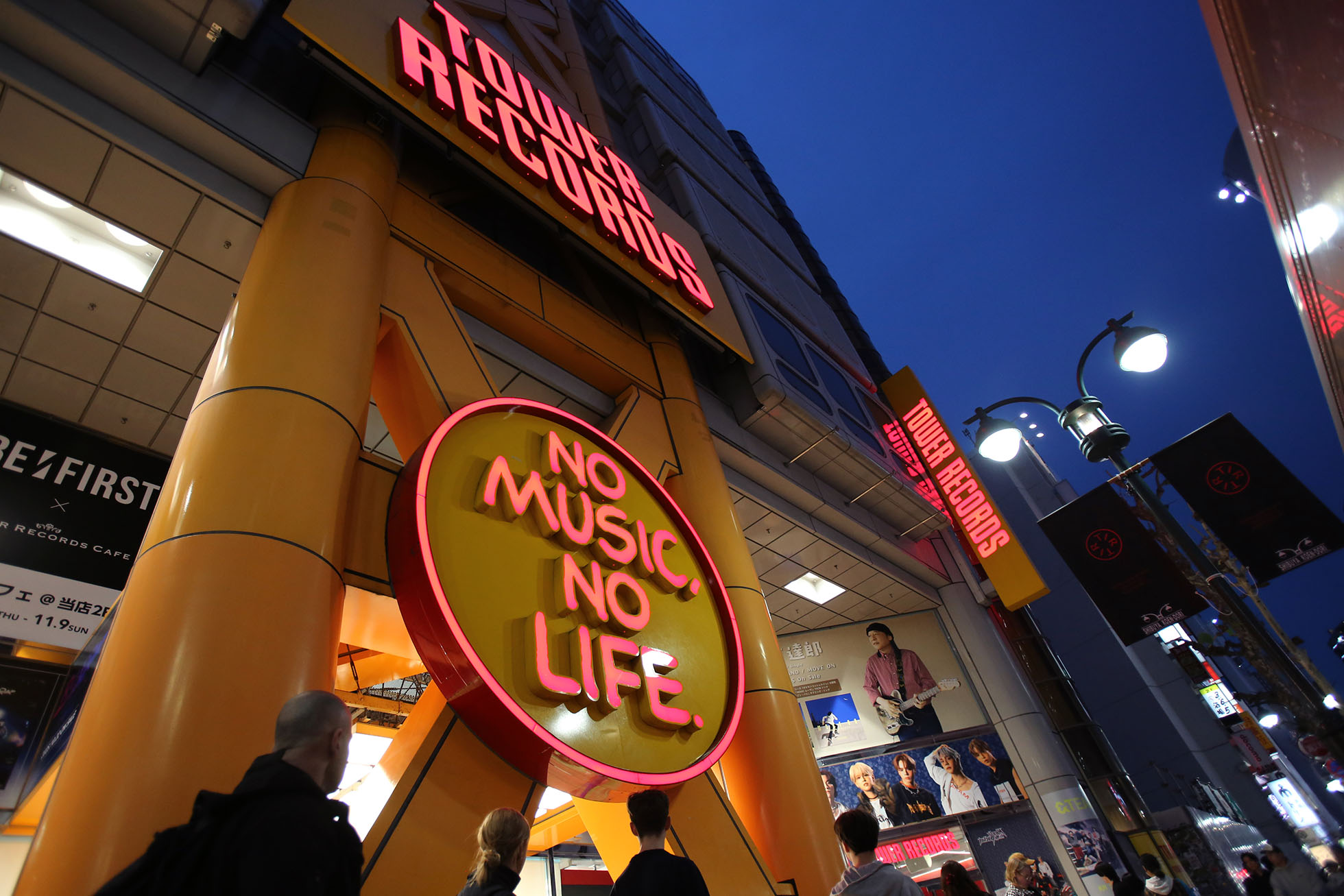
We can visit another iconic spot in Shibuya. About a three-minute walk northwest from the Scramble Crossing stands Tower Records, with its sign reading “NO MUSIC, NO LIFE.” This store has been in Shibuya's Jinnan neighborhood for 30 years. Known as a “sanctuary for Western music,” it has made efforts to discover and nurture artists, supporting Japan’s music culture.
In November 2025, large-scale renovations started on each floor. By February 2026, it is scheduled to be reborn as a “new experiential music store,” where music, culture and fans intersect. The areas of “oshi-katsu” (supporting favorite artists) and “K-POP” are expected to be strengthened.
As dusk falls, the city stroll comes to an end here. If the Tokyo scenes introduced here remain in memory, that would be delightful. How about choosing Tokyo as the next travel destination?
Information
Tower Records Shibuya Store - English Information
https://towershibuya.jp/access